AI vs HPLC: Can Artificial Intelligence Replace Cannabis Potency Testing?
Everyone’s Talking About AI — But Can It Tell You the THC in Your Cannabis?
From Claude to ChatGPT, artificial intelligence is dominating headlines across Canada and around the world. These tools can write code, pass bar exams, analyze massive datasets, and generate insights that would take humans weeks to compile. Naturally, cannabis operators are asking the next logical question: if AI is this powerful, can it replace laboratory cannabis potency testing?
It’s a fair question — and the answer matters for every LP, craft grower, and processor making decisions about quality control infrastructure. Here’s the thesis up front: AI is genuinely transformative technology, but when it comes to actual molecular measurement, analytical chemistry and purpose-built THC potency testing equipment like HPLC remain absolutely irreplaceable. The real opportunity lies in understanding where each technology excels.
Why AI Cannot Measure THC, CBD, or Cannabinoid Potency
The core issue is a fundamental distinction between prediction and measurement. AI — whether it’s a large language model or a machine learning algorithm — works by recognizing patterns in existing data and generating probabilistic outputs. It doesn’t interact with molecules. HPLC, by contrast, physically separates cannabinoids in a specific sample through chromatographic principles and directly quantifies them against certified reference standards. One guesses intelligently; the other measures directly.
Some companies have explored AI-based potency prediction models using NIR spectroscopy paired with machine learning. While promising for rough screening, these approaches carry well-documented limitations: accuracy degrades across cultivars, calibration drift introduces errors over time, and the models simply cannot detect novel adulterants or unusual sample matrices they haven’t been trained on. For AI cannabis testing to work at a regulatory level, it would need to overcome fundamental physics — and we’re not there.
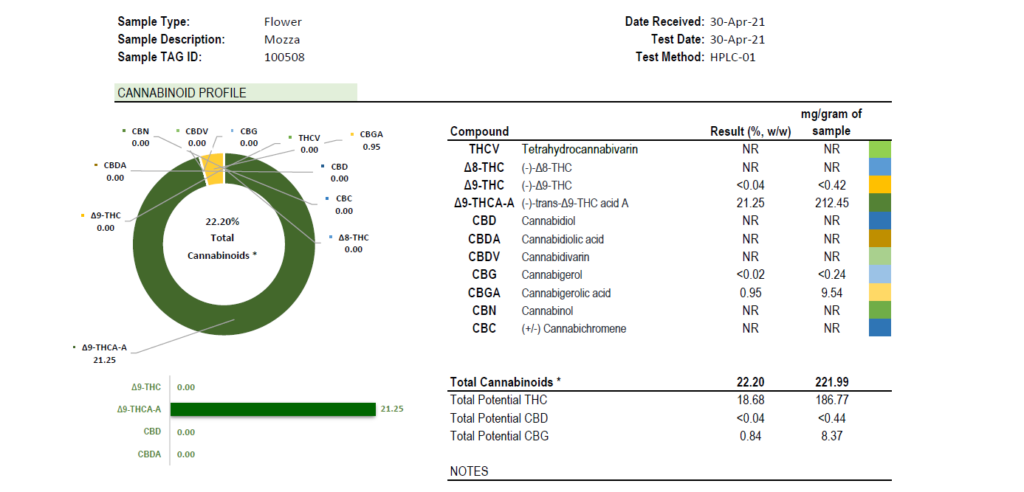
Most importantly, Health Canada compliance, consumer safety, and regulatory submissions demand validated analytical methods. Probabilistic estimates from a predictive algorithm — no matter how sophisticated — do not satisfy these requirements. When a Certificate of Analysis carries legal weight, you need real chemistry behind it.
How HPLC Works — And Why It Remains the Gold Standard for Cannabis Testing
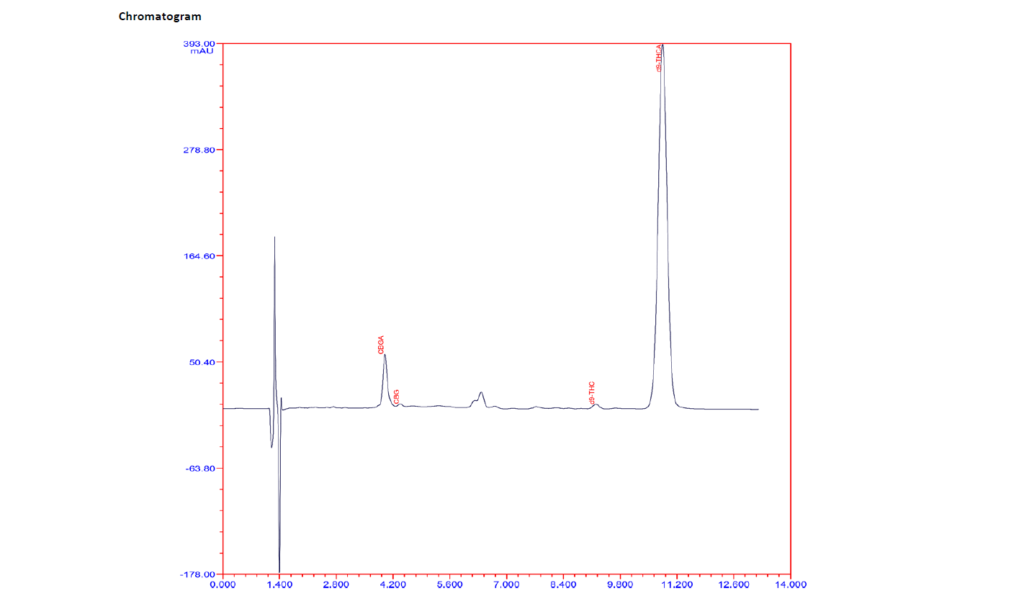
High-Performance Liquid Chromatography works by dissolving a cannabis extract into a liquid solvent and pushing it through a specialized column packed with stationary phase material. Different cannabinoids interact with this material at different rates based on their chemical properties, causing them to separate. A UV detector at the column’s exit identifies and quantifies each compound by comparing it against certified reference standards — delivering precise, reproducible potency data.
The reason a cannabis HPLC analyzer is preferred over gas chromatography (GC) for potency testing is critical: HPLC operates without heat. GC’s high temperatures cause decarboxylation, converting THCA to THC and CBDA to CBD during analysis — meaning you lose the ability to accurately distinguish acidic and neutral cannabinoid forms. For regulatory compliance and accurate label claims, this distinction is essential.
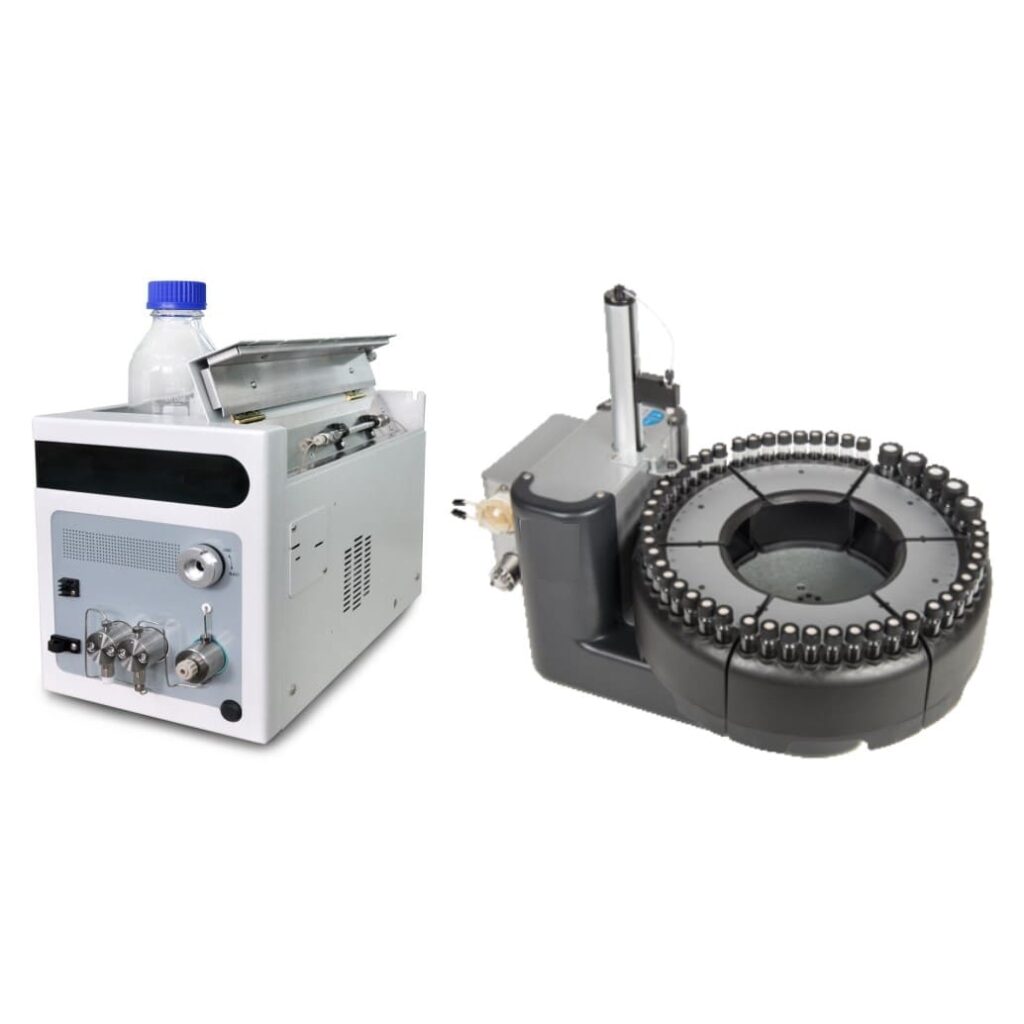
The CTInstruments Cannabis HPLC Analyzer is purpose-built for exactly this workflow. It’s a turnkey, validated system designed for in-house cannabis potency testing by cultivators, processors, and micro-labs — delivering the same analytical rigor as a contract laboratory, right on your facility floor.
Where AI Actually Helps: LIMS Software and Smarter Lab Operations
Here’s where the conversation gets exciting: AI and intelligent software absolutely have a critical role in modern cannabis testing — just not at the point of molecular measurement. The real value of AI sits in the data intelligence layer that surrounds your analytical instruments.
Cannabis LIMS software (Laboratory Information Management Systems) enhanced with AI-powered features can streamline sample tracking, automate data management, detect trends across production batches, flag out-of-spec results before they become compliance problems, and generate regulatory reports with minimal manual intervention. This is where artificial intelligence transforms lab operations from reactive to proactive.
CTInstruments’ LIMS software integrates directly with their HPLC hardware, creating a unified in-house testing ecosystem. Real analytical data flows seamlessly into an intelligent workflow layer — giving operators both the hard measurement and the smart management in one platform.
The Smart In-House Lab: HPLC Hardware + AI-Powered Software
The case for bringing testing in-house has never been stronger. Operators gain faster turnaround times, eliminate recurring third-party lab costs, enable real-time quality control, and make batch-level decisions that protect both margins and brand reputation. When you’re waiting days for external results, you’re losing money and agility.
The ideal modern cannabis lab pairs a validated Cannabis HPLC Analyzer generating hard, defensible data with cannabis LIMS software handling the intelligence layer — sample management, trend analysis, compliance documentation, and reporting automation. This combination delivers contract-lab precision with operational efficiency that external testing simply cannot match.
CTInstruments delivers both sides of this equation, enabling LPs, craft growers, and extraction companies to operate with analytical confidence and AI-assisted workflow intelligence under one roof.
What Canadian Cannabis Operators Should Actually Be Asking About AI
Instead of asking “Can AI replace my lab?” the smarter question is: “How can AI make my lab faster, more compliant, and more profitable?” That reframe changes everything about how you evaluate technology investments.
Practical AI and software applications for Canadian cannabis operators include predictive harvest scheduling based on historical potency trends, automated COA generation, anomaly detection across grow cycles, and seamless integration with seed-to-sale tracking systems. These are real, available capabilities that deliver measurable ROI today.
The operators who win in Canada’s maturing cannabis market will be those who adopt modern tools strategically — not chasing hype, but pairing validated chemistry with intelligent software to build operations that are accurate, compliant, and efficient.
The Bottom Line: AI Is Your Lab Assistant, Not Your Lab Replacement
AI enhances cannabis testing workflows in powerful ways, but it cannot replace the physics and chemistry of HPLC-based cannabinoid quantification. Molecules don’t care about algorithms — they require direct, validated measurement. The future of in-house cannabis potency testing isn’t AI or HPLC; it’s AI and HPLC working together.
CTInstruments delivers exactly this: purpose-built HPLC hardware and integrated LIMS software designed specifically for cannabis operators who demand accuracy, regulatory compliance, and operational efficiency in a single ecosystem.
Ready to build your smart in-house cannabis lab? Visit cannabistestingsimplified.com to explore the Cannabis HPLC Analyzer and CTInstruments LIMS software — the modern approach to accurate, AI-enhanced potency testing. Request a demo today.